

News from Our Practice
Here we keep you regularly updated on news from our practice – from new treatment options to practical tips for your dental health.
Feel free to check back regularly, or simply ask us about it at your next appointment.
Frequently Asked Questions
News
A dental injury can range from a simple crack in the enamel to teeth being knocked out completely, together with jaw fractures. Often the tooth can still be saved – provided the right action is taken quickly. The following ten rules summarize what those affected and the people accompanying them should know:
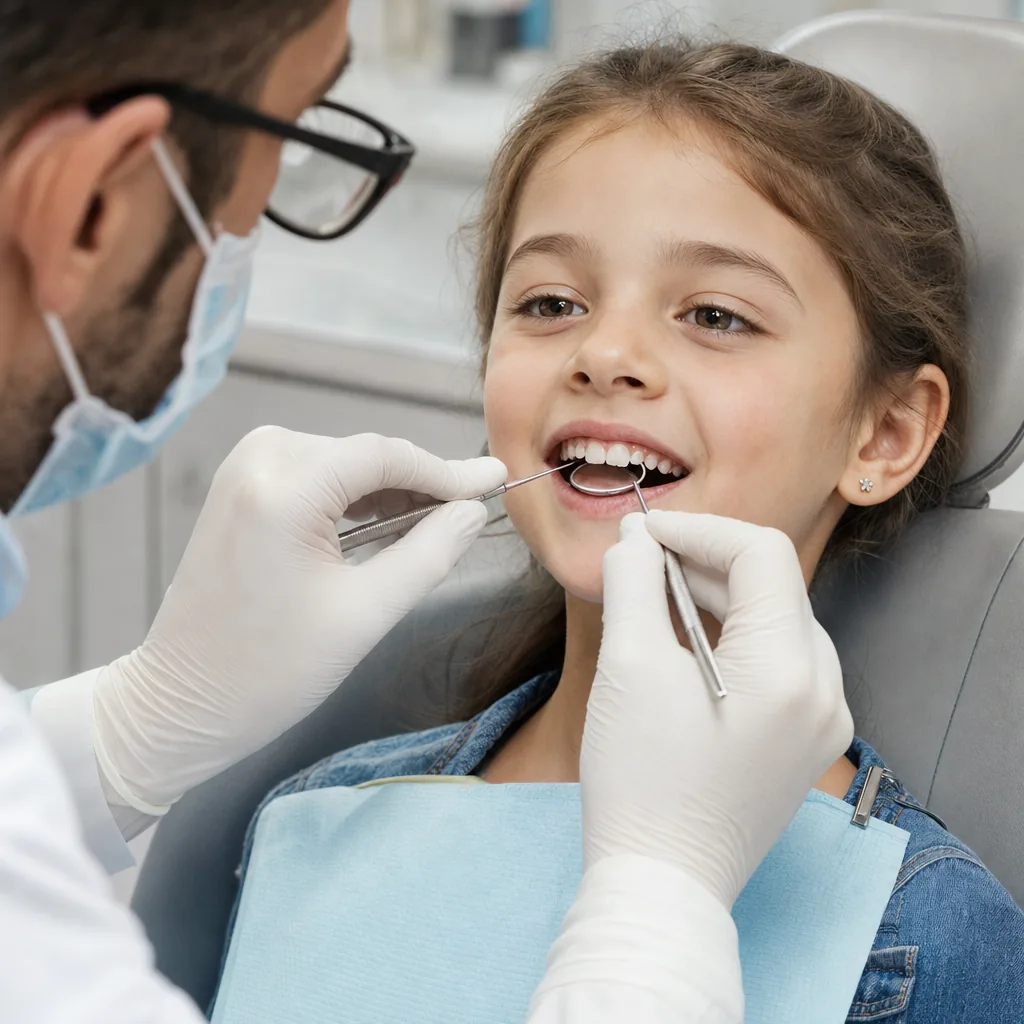
First-Aid Plan: Every Minute Counts
1. Stay calm, reassure the injured child, and take a look in the mouth by gently lifting the lip.
2. Since the wound can bleed heavily, apply pressure to the bleeding area with a cloth handkerchief or sterile dressing material and cool the area from the outside.
3. If teeth are loose and wobbly, do not shake or move them further – leave them untouched.
4. Look for knocked-out teeth or tooth fragments. Only ever hold the tooth by the crown, never by the root – and do not clean the tooth, even if it is dirty.
5. Keep the tooth moist during transport – ideally in a tooth rescue box, available at pharmacies. Such boxes are also kept ready at some schools, kindergartens, sports clubs, and swimming pools.
6. If the tooth is placed in the special nutrient medium within 20 minutes at the latest, the sensitive cells of the periodontal ligament (root membrane) can survive for up to 48 hours.
7. Without a rescue box, cold UHT milk can be used instead; cling film, saliva collected in a container, or isotonic saline solution are further options – however, these reduce both the possible storage time and the chances of healing.
8. Never place the tooth in water, a damp tissue, or in the mouth, and do not transport it dry.
9. Go to a dental clinic or dental practice immediately.
10. The dentist will examine the teeth in detail, treat them accordingly, and document all findings in the patient file – important for possible insurance claims, for example in the case of school or work accidents, as well as for later treatment in the event of long-term consequences.
For first responders, a nationwide dental emergency hotline is available in Germany: (1805) 012800 (call charges apply). Further information on tooth rescue can be found at www.zahnrettungskonzept.info; at zahnunfall24.de you can see where tooth rescue boxes are available in addition to pharmacies.
Facts and Figures About Dental Trauma
• About 50 percent of all children and adolescents experience at least one dental injury by their 16th birthday [1].
• Baby teeth at kindergarten age, as well as the teeth of children between nine and 16 years old, are especially affected [1].
• Boys are affected three times as often as girls [2].
• In 70 percent of cases, the injury affects the upper central incisors [3].
• 30 percent of injuries affect the baby teeth, 20 percent the permanent teeth [2].
• About two-thirds of accidents happen at home, on the playground, or during sports [1].
• A mouthguard reduces the risk of injury in sports-related dental accidents by 60 percent [4].
• The chances of saving the tooth are highest when it is placed in a tooth rescue box within the first five minutes [5].
• The resulting economic costs in Central Europe amount to around five million euros annually per million inhabitants [5].
• If a front tooth is lost at a young age, individual follow-up costs of around 10,000 to 20,000 euros can arise over a lifetime [5].
Sources:
1. Deutsche Gesellschaft für Mund-, Kiefer- und Gesichtschirurgie (German Association of Oral and Maxillofacial Surgery)
2. Bayerische Landeszahnärztekammer (Bavarian State Chamber of Dentists)
3. Bundeszahnärztekammer (German Dental Association)
4. Deutsche Gesellschaft für Zahn-, Mund- und Kieferheilkunde e.V. (German Society of Dentistry and Oral Medicine)
5. zahnunfall.de/Dr. Yango Pohl
Source: www.dzw.de