

Professional Teeth Cleaning (PTC)
A thorough examination, systematic assessment of findings, and an informative conversation come at the beginning of every professional teeth cleaning – followed by the removal of plaque, polishing, and final fluoridation.
Frequently Asked Questions
Powder-Water Jet Device
The powder-water jet device uses a water-air mixture combined with a cleaning powder – such as calcium carbonate, sodium bicarbonate, or glycine – to remove discoloration and pigmented deposits from the tooth surfaces.
Polishing
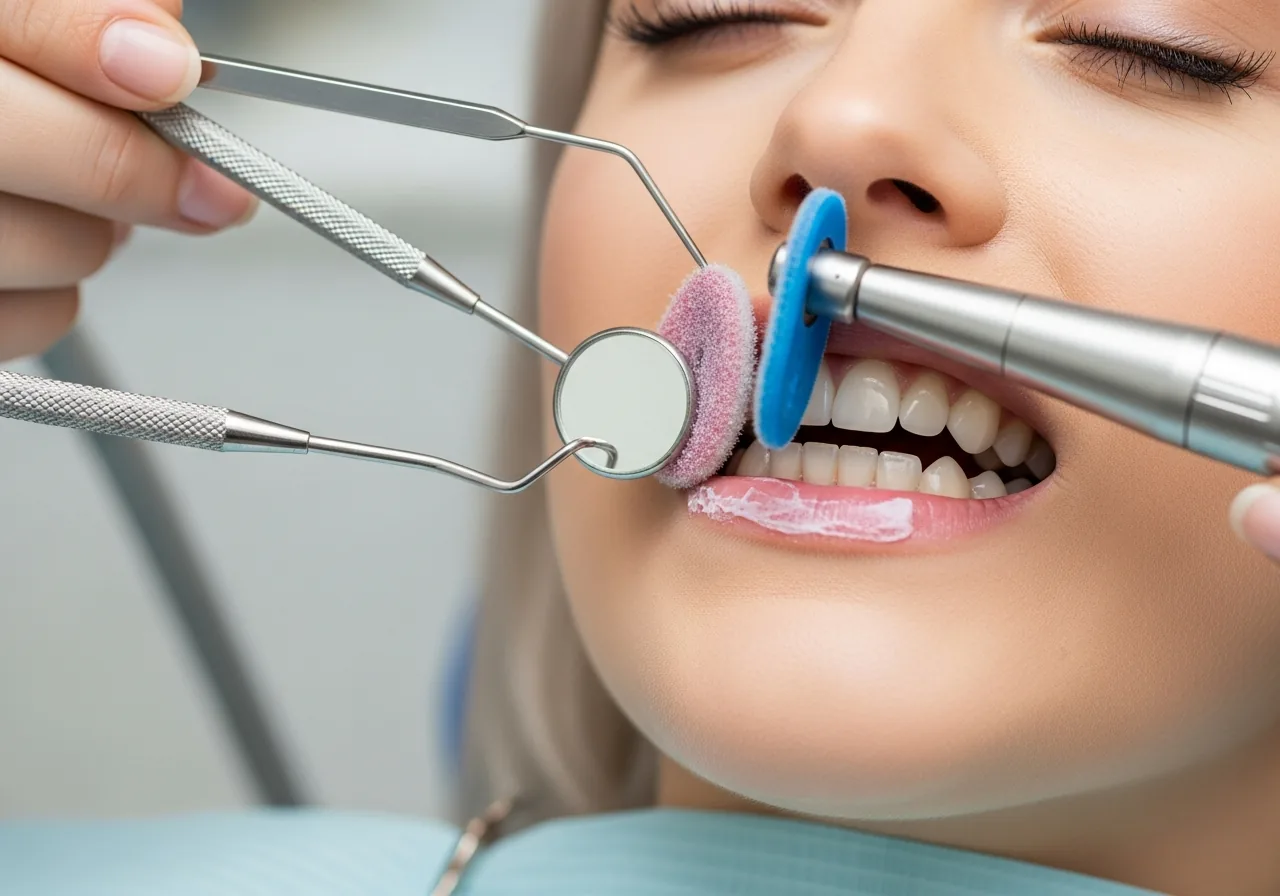
Fine cleaning is followed by polishing the teeth. The previous cleaning steps slightly roughen the tooth surfaces, so without smoothing, bacteria and plaque would quickly settle again. That's why we polish the tooth surfaces to a high shine using small rubber cups, fine brushes, and polishing paste of varying grades.
Fluoridation
Finally, we fluoridate the tooth surfaces with a special solution or varnish to help prevent tooth decay. Fluorides support remineralization – the redeposit of minerals into the tooth enamel – and thereby protect it against harmful acid attacks in the mouth.
Fissure Sealing
Fissures are fine grooves and furrows on the chewing surfaces where bacteria that are hard to reach with a toothbrush can settle. Their metabolic byproducts can cause tooth decay – by sealing the fissures, we help prevent this.
Pocket Cleaning
Cleaning gum pockets requires the utmost care, along with specialized expertise and experience in handling the appropriate hand instruments.